
The most recent FFYE Forum focused on a growing demographic in higher education – part-time students. As always, it was an immense pleasure to attend and get together with the FFYE community to discuss these important issues. As the presenters showed, there are more and more students studying part-time these days, and many important issues to consider in ensuring their needs are met.
Hosted by FFYE Coordinator Dr Kathy Egea, with special guests Sonal Singh, Associate Professor Kelly Linden and U:PASS leader Adam D’Costa, there was a lively and complex discussion about what part-time students need to succeed, and how we might go about making a more inclusive university for these students.
Setting the Scene with Sonal Singh
Sonal is well versed in equity concerns for different student demographics, as the Head of Equity Pathways at UTS. To get us started, Sonal detailed some of the essential factors that can affect many students, but particularly those in the part-time student group:
- Many part-time students are balancing their studies with paid work.
- Part-time study is not a preference, it’s what makes higher education possible for most part timers.
- Many students are not just working, but are working full-time jobs while studying.
- Data shows that part-time students are no longer a niche cohort, but the new majority.
Looking at the numbers with Associate Professor Kelly Lindon
Kelly has a comprehensive understanding of student behavioural demographics, having worked for the past decade in projects focused on student retention, and has also received an AAUT award for her work. Kelly went over detailed data analysis that granted important insights into the part-time cohort, drawing from her 2025–2026 ACSES Equity Fellowship research.
Kelly began with some stats showing the differences between part-time and full-time students – and this included higher dropout rates and higher rates of leave of absence, generally attributed to the other responsibilities part-time students carry.
Another important factor to consider is that many within the part-time cohort also come from equity groups. The graph below shows the distribution.
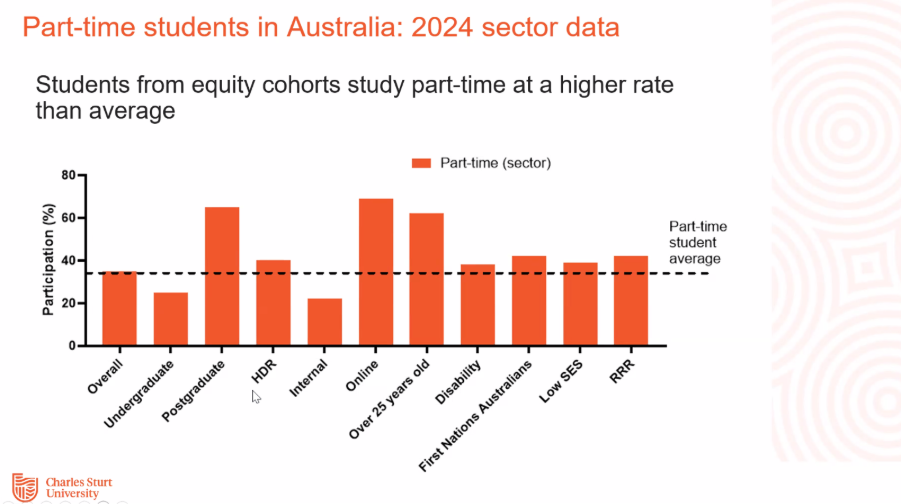
Much of the data revealed the barriers students face in gaining access to study – finance, time, responsibilities, etc. It is perhaps not surprising that many of the students who end up in the part-time cohort are also dealing with these additional complexities. The data also shows that part-time students come in at 7 success points below full-time students on average.
It’s not all bad news though, and it’s not that surprising when it comes to how part-time students do find success in their studies. One quote from Kelly’s research showed the power of the fundamentals – quality learning and teaching, with staff who engage with students.
“When lecturers are understanding and show an awareness of the monumental juggling act that is post graduate study with small children, it can completely change your mindset and your ability to engage with your course. Knowing that you have someone in your corner is invaluable.”
Quote from a student responding to the survey
Other important elements of flexibility were noted in the feedback – easy points of contact for students to get in touch with their lecturers, intuitive online systems, recorded lectures – these were all things that students noted had helped them in their studies.
Ideas from the FFYE community
As usual, there was much engaging discussion among the attendees. This took place in our breakout groups, and with a Menti activity run by U:PASS Senior Leader Adam D’Costa. In the group I was in, we were able to reflect on our own experiences of studying, as well as interactions with students and considerations for both sides (being students and staff).
The final question posed to the attendees was this:
Given the context of the student-centred university, what advice would you give to leadership to improve part-time student success?
Here are some of the ideas shared by the group:
- Recognise part-time students as a strategic equity cohort through strategy, policy and resource allocation
- Build flexible and predictable pathways with structured study plans, flexible pathways, advance timetable visibility and clear guidance about subject sequencing, workload, and progression options
- Create a culture that values part-time study through policy, communications and service design
- Strengthen connection, belonging and wellbeing – intentional design for peer connection, collaborative learning and engagement
- Improve teaching and learning by supporting academics to implement inclusive practice, workload, conscious assessment design, flexible learning and consistent expectations across subjects and faculties
- Enhance flexibility through systems, technology and staff capabilities – establish a minimum standard for LMS design and recorded learning, improve hybrid delivery, educate staff about part-time student needs for flexibility and accessibility.