
Studio subjects are a defining strength of teaching at UTS. They give students the freedom to explore ideas, build early, test often, and learn through action. In engineering and design studios in particular, this hands‑on energy often leads to impressive creativity and momentum.
Studios also reveal a recurring challenge, however: many students equate design with ‘doing’. Once a plausible idea emerges, teams frequently commit to it immediately. From that point on, effort goes into refining, fixing, and defending the first concept rather than questioning whether it is the right one. Progress becomes synonymous with building, while analysis is treated as something to get through quickly.
Why trial‑and‑error only gets students so far
This pattern is understandable. Studio timelines are tight, assessment pressure is real, and having ‘something to show’ feels productive. Yet early commitment to a single solution narrows the design space before the problem is fully understood. When students move too quickly into implementation, it can lead to issues like these:
- Assumptions about users, context, and requirements remain implicit
- Alternative concepts are explored superficially, if at all
- Decisions are justified after the fact rather than reasoned upfront
The resulting designs may function, but they often lack a clear internal logic. Requirements, concepts, and detailed solutions exist side by side, without strong connections between them.
In a university setting, repeated trial‑and‑error can mask this lack of connection as teams iterate until something works well enough. In professional practice, however, this approach quickly breaks down, especially in industries where safety, regulation, or certification is crucial. Engineers are expected to explain why decisions were made, how risks were anticipated, and what the implications of changes are across a wider system.
Reframing design in Systems Design 2
The structure of this subject felt similar to designing a product in a professional setting.
Student reflection
In 41067 Mechanical Systems Design Studio 2, we explicitly challenge the idea that good design means building early and refining often. Instead, the studio frames design as a structured decision‑making process, where thinking deliberately precedes making. To this end, the studio uses an established engineering design process model, which provides structure while allowing for flexibility and learning.
Students are required to spend more time in the problem space: analysing stakeholders, clarifying requirements, and understanding system functions before developing solutions. Conceptual design is treated not as a leap from idea to artefact, but as a translation step from problem understanding to multiple alternative concepts. Only once these alternatives are explored, compared, and risk‑checked do students move into detailed design and prototyping.
This shift often feels uncomfortable at first, with progress feeling slower and less tangible. Yet many students later recognise how much their initial assumptions changed once they paused and analysed the problem properly.
Making design thinking visible
I now know for sure there is no room for trial and error, design is a methodical art.
Student reflection
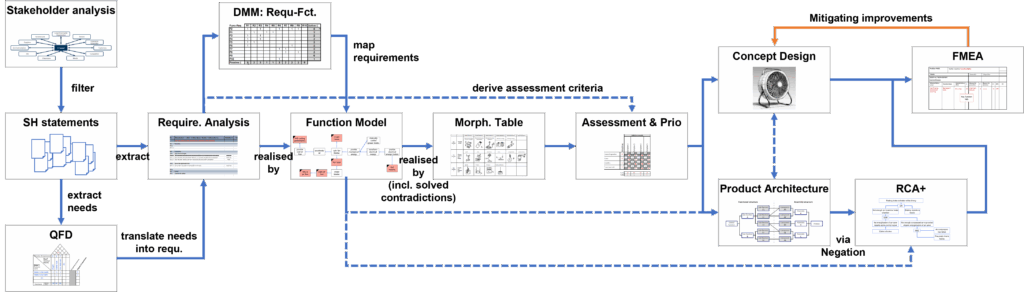
A key learning for students is that design artefacts are not isolated tasks. Each artefact builds on earlier reasoning, informs later decisions, and must stay consistent as the design evolves.
On an artefact level, we support this by a clear, traceable design artefact flow, reinforced through feedback and assessment. A simple visual of this flow often becomes a turning point, making explicit that design is a connected system of reasoning, not a collection of documents.
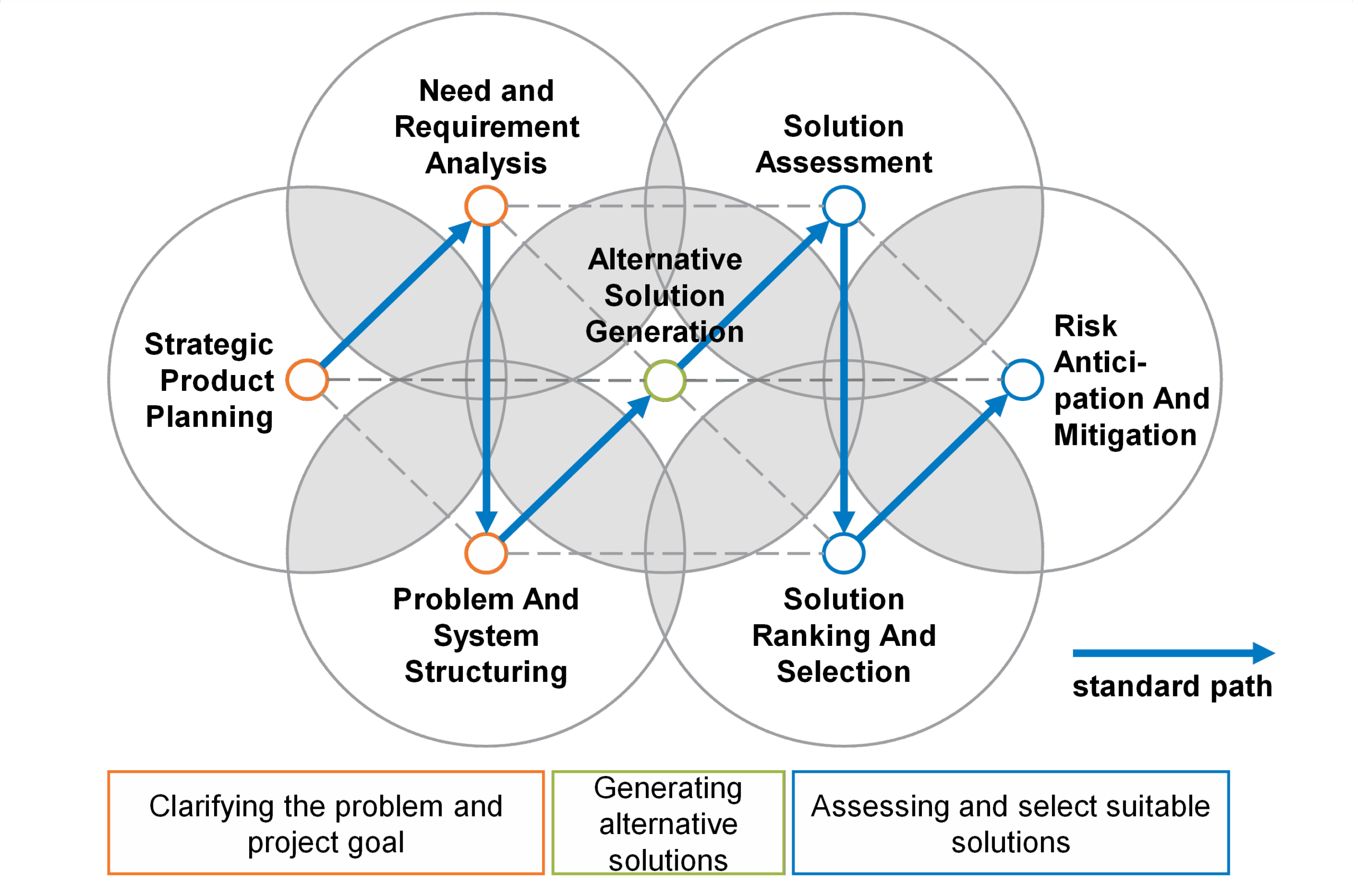
On a process level, the underlying process model with its network structure and reflection questions guides students through their design journey, such as what design activities to do next, or how to systematically and efficiently iterate if specific design artefacts are insufficient. When something does not work, the question becomes not “what do we patch?”, but “which earlier decision needs revisiting?”
Assessment is aligned with this approach. Short formative sprints focus on learning how to think methodically, rather than just producing polished outcomes. Even small rituals help reinforce the mindset in a memorable way such as a weekly recurring studio theme song reminding students that “design is not just doing”.
A broader reflection for studio teaching
UTS students are already highly creative. The challenge for studio teaching is not to generate more ideas, but to help students learn when to pause, analyse, and think with intent. Our experience in Systems Design 2 suggests that making design reasoning explicit and assessable helps students move beyond trial‑and‑error towards more confident, defensible decision‑making. For many, this shift marks the moment when design stops being about doing more, faster, and starts to feel like a professional practice they can explain, justify, and own.