
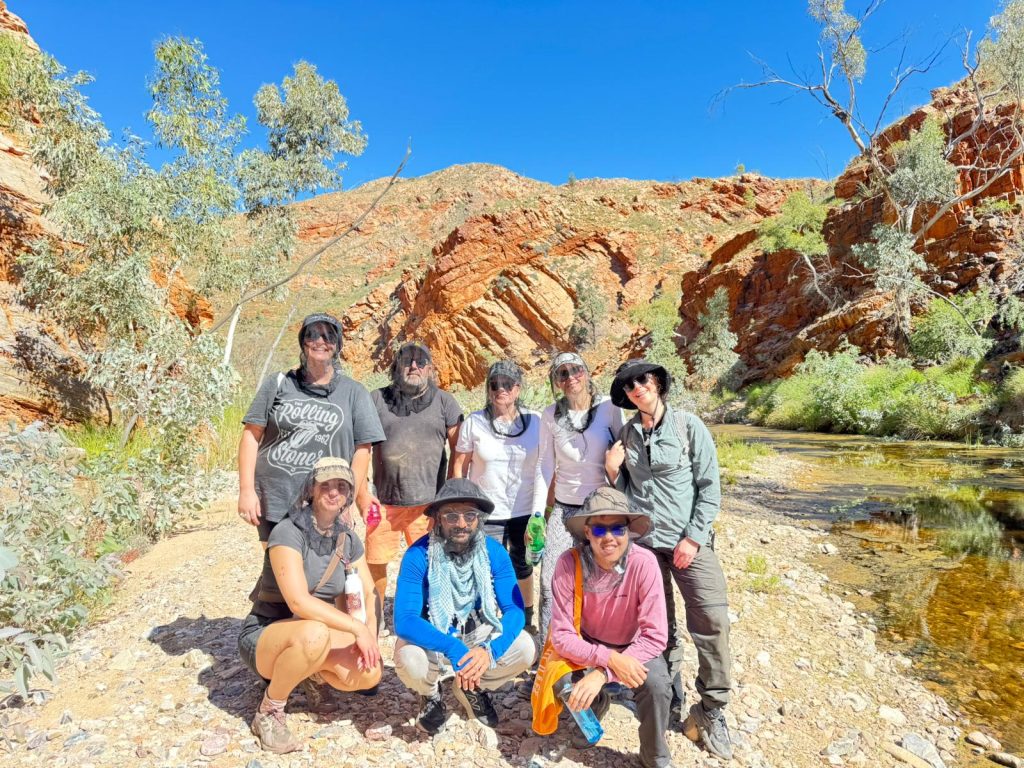
The moment I stepped off the plane in Mparntwe (Alice Springs), the desert announced itself unapologetically: swarms of flies besieging every inch of exposed skin, the dry air cracking my lips within hours, the relentless sun bleaching colour into a monochrome of red and blue. As I swatted at the insects with the desperation of a city dweller wholly unprepared, a single thought echoed: “What have I done?”
Those first chaotic hours foreshadowed what would become the most transformative six weeks of my professional life: a Jawun secondment with the Ngaanyatjarra Pitjantjatjara Yankunytjatjara Women’s Council (NPYWC), where I’d confront the gaps between institutional goodwill and genuine reconciliation, and where the red earth would teach me more about listening than any boardroom ever could.
Anangu leadership in action
The NPYWC is no ordinary organisation. Founded in 1980 and governed by 11 Anangu women Directors, it delivers critical health, social and cultural services across 350,000 square kilometres of the Ngaanyatjarra, Pitjantjatjara, and Yankunytjatjara (NPY) Lands – an area spanning three states and 26 remote communities. From Tjungu aged care to Gangkarri Traditional Healers, from Tjanpi desert weaving enterprises to frontline domestic and family violence (DFV) services, NPYWC’s work is as vast as the Country it serves.
Yet what struck me most wasn’t their scope, but their quiet humility. Here was an organisation saving lives daily, whether through youth programs keeping kids on Country or DFV teams navigating complex cross-border jurisdictions. Yet their social media sat dormant, their newsletters sparse. “We just do the work,” a colleague remarked when I asked about their non-existent LinkedIn presence.
This cultural reticence, this preference for action over self-promotion, became my mission to bridge. How could NPYWC attract the staff it desperately needed if the world didn’t understand its impact. Zain Warsi
Fixing the invisible pipeline
My project brief was clear: tackle recruitment and retention for an organisation still reeling from COVID’s aftermath. The turnover rate had surged past 50%, and the council hadn’t bounced back. My goal? To optimise recruitment marketing (especially for Indigenous candidates) and strengthen NPYWC’s brand equity. But how?
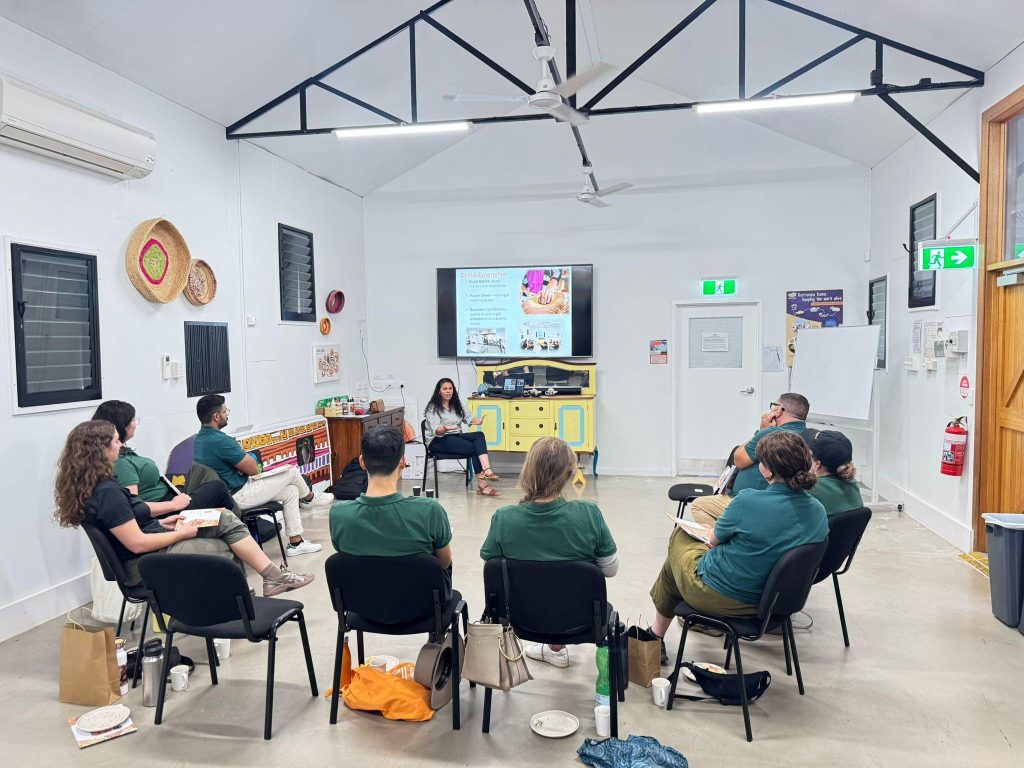
I started by auditing the website, dissecting its structure. The careers page had position descriptions buried under jargon, no mention of relocation support or salary sacrifice, nothing to convey the why of working here. Resulting site improvements included clearer context for position descriptions and a side-quest overhaul of videos, but the real shift was more tonal than technical. NPYWC’s work saves lives, yet its recruitment materials read like government reports. We pivoted to voice the soul of the place: the golden-hour yarns after meetings, the thrill of desert tracks, the privilege of learning women’s business.
To turn this around, I broke the brief into 6 projects:
- Website audit – diagnosing gaps in user flow and information hierarchy
- Careers page deep-dive – restructuring it as an invitation, not a manual
- Competitor analysis – mapping best practices from similar organisations
- Position description revamp – adding ‘Why This Role Matters’ and relocation support details
- Marketing video feedback – advocating for shorter, dual-language cuts
- Communication strategy – tying it all together to target Indigenous candidates
Now, every touchpoint – from job ads to interviews – would reflect NPYWC’s true weight: not just a workplace, but a doorway to ngura (Country, home).
Lessons from the desert
Mparntwe (Alice Springs) taught me to listen differently. At UTS, meetings start first thing in the morning; at NPYWC, they begin when the last person finishes their morning yarn. In Sydney, we chase KPIs; here, success might mean an Elder finally trusting you enough to correct your pronunciation of Pitjantjatjara (which they did!).
The art galleries of Mparntwe reshaped my perspective most profoundly. Watching artists translate ancient knowledge onto canvas explaining how concentric circles represent waterholes, U-shapes denote people sitting in ceremony; I finally saw Indigenous art as more than aesthetic. These were living maps, stories, legal documents.
Carrying the red dust home
I returned to Sydney with skin still tinged red from the desert sun, but with far deeper stains on my conscience. Not all lessons had been uplifting. Some experiences had exposed uncomfortable truths about how institutions engage with Indigenous communities, about the performative gaps in corporate “reconciliation” efforts, about my own blind spots as a non-Indigenous professional.
Yet there’s hope in the small things. The Anangu women who patiently corrected my Pitjantjatjara greetings. The NPYWC staffer who proudly wears her Tjanpi hoodie. The realisation that ‘remote work’ isn’t about isolation but about the richest kind of connection, if you’re willing to listen.
To the NPYWC team: “Wai! Palya.” (Thank you. It’s good.)
To UTS: Thank you for the opportunity
To myself: Keep scratching at that discomfort – it’s where growth lives