
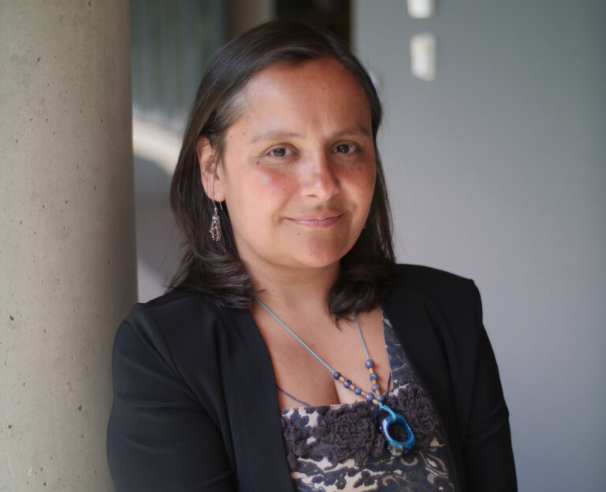
Recent conditions for higher education have been far from ideal. External pressures and the seemingly unsolvable challenges they bring can make these conditions feel like we’re living in crisis. But, as Vanessa de Oliveira Andreotti explains in a presentation organised by UTS’s Connected Intelligence Centre, the collapse of a bad system can be seen as a reckoning – and a portal to new growth.
Allowing the Leaning Tower to gently fall
In her presentation, Vanessa explores how universities might be repurposed to fulfil their responsibilities to future generations in the context of accelerating social and ecological breakdown. As per her paper on this topic, she shifts the problematic metaphor of universities as elitist ivory towers to the more representative Leaning Tower of Pisa (in a swamp!). Rather than letting it fall hard or try to straighten it back to its ivory tower status, she suggests a controlled fall into a tree, then a humble nurse log. This will support the composting of the current system and nourish emerging possibilities.



A bus for navigating complexity
In facing hyper-complexity together, Vanessa asks us to imagine ourselves as a bus filled with passengers, each representing different perspectives. Some sit at the front, familiar and vocal; others hide at the back, repressed or introverted. Observing these different behaviours and creating space for them will foster better relationships and resilience for the ride ahead. It’s a playful metaphor that encourages reflection on whether the bus is persevering uphill, stuck in a ditch or simply cruising to its destination.
This approach matters because we live in an era of liquid modernity with complex challenges that are both local and global. Higher education is facing uncertain finances, equity challenges and technological disruption, all of which erodes universities’ monopoly on knowledge and negates their traditional ways of doing things.
Weightlifting education
Traditional education is built for stability; it falters in volatility, complexity and ambiguity. If the university of today is a leaning tower, how do we create conditions where it can become a nurse log? This is where we need what Vanessa describes as “weightlifting education” – moving systemic burdens from our backs to the ground for collective procession.
Rather than applying narrow-boundary intelligence that leads to a single goal, Vanessa recommends we use wide-boundary intelligence: collectively engaging in inquiry through the layers of complexity and holding that contradiction. This mode of discovery also requires some relational/entanglement wisdom – recognising our co-constitutive relationship with ecosystems and cultures. Without this shift, we risk accelerating ecological collapse and social fragmentation. Yet, this polycrisis is also an opportunity to reimagine education and relational practices that sustain life, foster belonging and prepare us for a deeply interconnected world.
An Indigenous ritual for budget cuts
Vanessa closes with an anecdote from a period of significant budget cuts in her faculty. Rather than focusing on protecting the past, she wanted to orient the decisions toward safeguarding the future. She consulted an Indigenous mentor from Peru, who advised her to create a ritual that would bring wisdom and relational accountability into the process.
In a leadership meeting, Vanessa asked department heads to write down names of children under 17 they cared about, followed by groups of children in minorities or facing inequity, and even non-human children. Each name was spoken aloud and placed in a bowl, which was later adorned with flowers. This symbolic act reframed the group’s accountability, shifting the conversation from self-preservation to collective responsibility for future generations.
This practice was extended to a faculty retreat where fishbowl dialogue was utilised. Early-career staff discussed what needed to change for them to fulfill obligations to the future in an inner circle, senior staff occupied an outer circle, and an empty seat represented ancestors or the land. This transformed the discussion from career advancement to the university’s purpose in serving future generations. As a result, budget conversations became more collaborative and visionary, grounded in shared responsibility rather than competition. The ritual helped turn current strategies into a sustainable reality and guided decision-makers to honour obligations to future generations.
Vanessa’s full presentation and other resources are available on the CIC website.