
Coming to Australia with an incomplete story
When I moved to Australia in 2016, I had no idea that I had entered the land of the world’s oldest living culture. To me, Australia did not seem to share many of the structural problems of Latin America. From a place of complete naivety, I believed that so-called “first world” countries did not have major systemic issues — or at least not of the same scale as those I had grown up with.
During my first month as a migrant, I came across a photographic exhibition by Ingetje Tadros at the community-driven gallery 107 Projects. These images of the Yawuru and Djugun peoples captured joyful moments, but they also revealed a much harsher reality: people living without adequate access to basic services, systematically neglected, disenfranchised and under constant threat of displacement. I remember thinking: how come I didn’t know about this?
This moment sparked my learning about Australia’s violent history and its continued legacy. I learned about the Stolen Generations. As an Argentine, this history resonated deeply – we too carry the trauma of a stolen generation at the hands of the last military dictatorship. The crucial difference, however, is that in Australia these policies of violence, dispossession and identity erasure were sustained for decades under democratic governments.
Over time, I also began to notice that many non-Aboriginal Australians I spoke with either denied the problem altogether or justified government actions through deeply entrenched and unjust stereotypes. This raised a question that stayed with me: is systemic change possible when so many people remain in denial?
When reflection becomes action
As a migrant, I feel a particular responsibility to educate myself and to share that knowledge with others. In light of the 2023 referendum defeat, and reflecting on my own position and responsibilities, I applied for a Jawun secondment. Given that my professional work sits within the gender equity space — an area where meaningful change requires an intersectional lens — Jawun represented a critical opportunity: to continue learning, to engage closely with community-led organisations, and to contribute to work grounded in self-determination.
Over 6 weeks, I had the opportunity to complete my Jawun secondment working across 2 projects, with 2 different organisations and communities. It was one of the most humbling, grounding and meaningful experiences of my professional life.
I will be honest: because so much of this work is relational, I was initially concerned that not being full-time might limit my ability to reach the level of understanding required to genuinely add value. What I initially saw as a challenge, however, became an unexpected opportunity. Working across two organisations allowed me to meet more people, listen to a wider range of stories, and develop a richer understanding of different community priorities, histories and ways of responding to both shared and distinct challenges. I was able to see how each community defined its own needs, strengths and solutions, shaped by place, culture and lived experience.
What community-led work taught me
Working alongside community-led organisations taught me more than any program or workshop ever could. I learned about deep listening, collective responsibility, authentic relationships and the value of building something together rather than “delivering” something to others. Community work is not a 9-5 job; it is care, accountability and commitment every single day.
Through Jawun, I worked with the La Perouse Local Aboriginal Land Council on the development of an evaluation framework for their Stronger Families service model — a culturally grounded family support initiative aimed at preventing and reducing the number of children entering out-of-home care. With Tribal Warrior Aboriginal Corporation, I contributed to the development of audiovisual content for their e-learning platform, supporting knowledge-sharing in ways that are accessible, visual and community-owned.
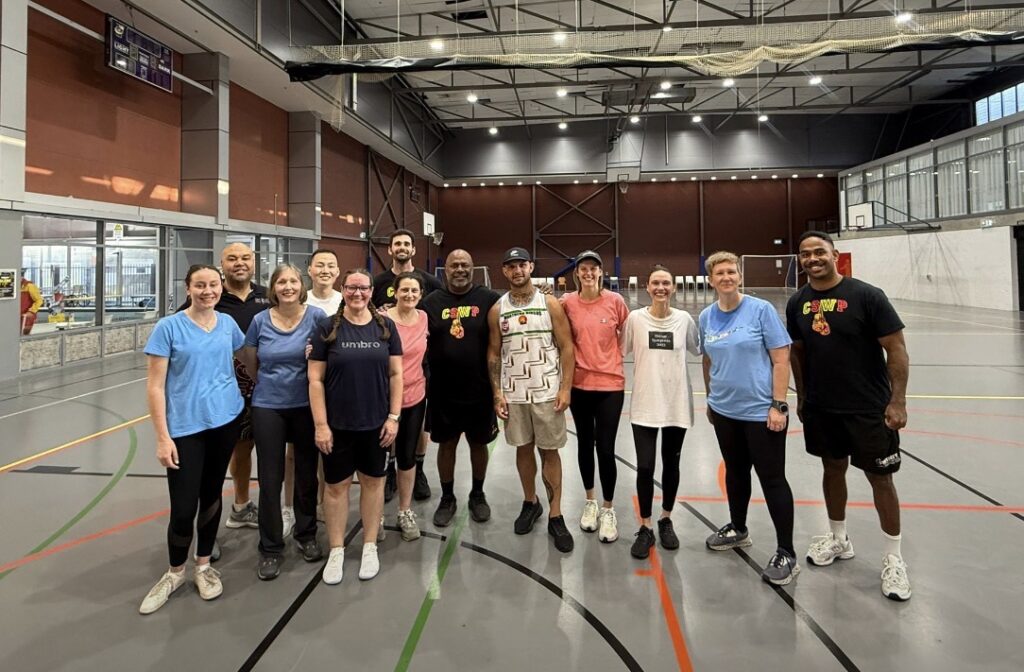
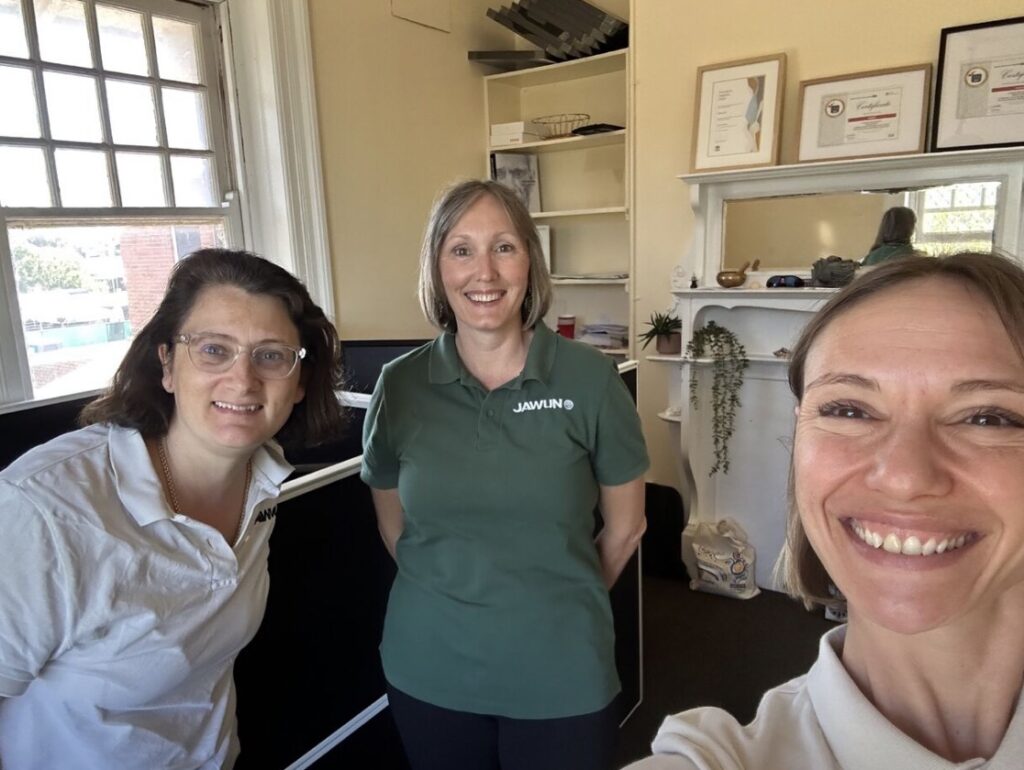
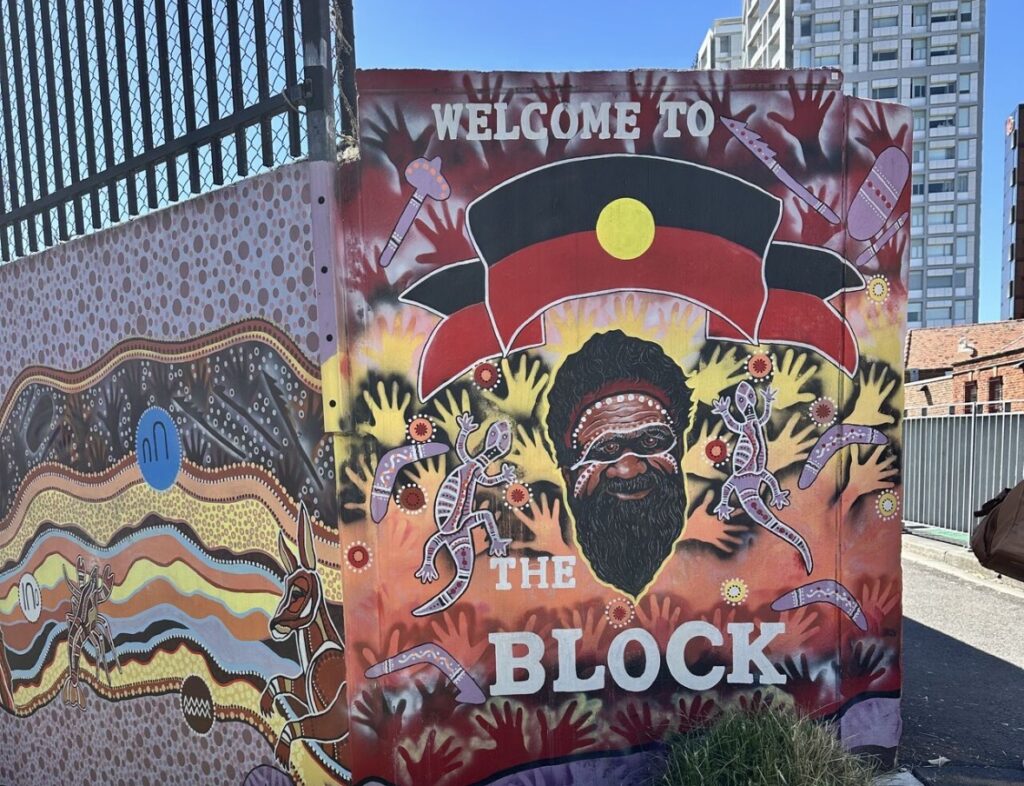

Jawun Secondees at Mungejup Arts and Culture Centre, Refern. Feature image: La Perouse at sunset
Beyond the project work, some of the most meaningful learning happened in between, such as reflective walks along Yarra Bay in La Perouse and connecting with locals during extensive filming in Redfern. I also attended 6am boxing sessions with Tribal Warrior’s Clean Slate Without Prejudice program, witnessing how discipline, care and community are woven together in ways that extend far beyond fitness.
These experiences reinforced key learnings that now feel non-negotiable:
- the importance of community-led decision-making
- the need to build trust before designing systems or programs
- the clear limitations of traditional university or corporate operating models when they are applied, uncritically, to Indigenous contexts
I also developed a much deeper understanding of why so many organisations struggle to retain Aboriginal staff. Again and again, I saw how roles are often already defined for people before they arrive, leaving little space for genuine agency or contribution. While Aboriginal staff are frequently expected to adapt to rigid institutional systems, there is far less willingness for those systems to adapt in return. Beyond surface-level measures, there are limited structural strategies in place to reduce colonial load, prevent re-traumatisation, or recognise the ongoing cultural and emotional labour carried by Aboriginal staff within non–community-led organisations.
A new-found confidence and way of connecting
This experience made it clear to me that the opportunity is not simply to “learn more” through Jawun, but to learn together (Ngarra Nuru in Dharug language). It also reminded me how much I still have to learn about Aboriginal culture and history.
At the same time, it showed me how much powerful, community-driven work is already happening in the city I now call home. I discovered a way of connecting with others that felt deeply familiar and warm. I came to understand that to yarn is not simply to chat – it is a way of being with others, of sharing time, stories and presence.
In many ways, this experience brought me full circle. It reaffirmed my responsibility as a migrant, strengthened my commitment to intersectional and community-led work, and gave me something deeply personal: confidence. Confidence in my ability to listen, to adapt, and to contribute with care. And confidence that, even far from where I was born, it is possible to feel at home.