
Co-authored by Lucy Blakemore and Chris Girdler
This year, 10 FFYE grants explored assessment in the age of genAI, with each project aiming to address one of the two questions raised in the 2024 UTS response to TEQSA:
- How can we be confident that our students are graduating with the skills and knowledge that we claim they have, i.e. that students have developed these skills and knowledge through the course and the CILOs have been assured?
- How can we prepare our students to engage ethically and critically in a world where GenAI is increasingly integrated into professional and personal life?
Exploring the grants
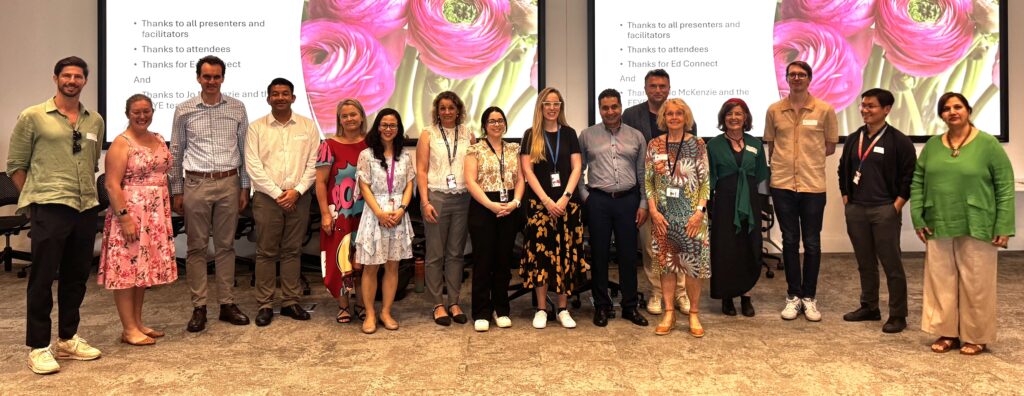
The final FFYE Forum of 2025 brought more than 140 attendees together in a collaborative classroom on campus to share practice and celebrate outcomes from the 10 projects. They touched on a wide range of applications from interactive oral assessments in MBA programs to AI-assisted decision making in forensic science.
One-minute elevator pitches from each of the grant leads were shared, then 3 rounds of World Café-style presentations allowed attendees to choose and hear about specific grants to gain deeper insights. You can read summaries of all of the grants in this blog post, and we have also published a couple of pieces spotlighting specific grants, with more to come in the new year:
- From confused to confident: resources that demystify GenAI use at UTS by Amara Atif, Fabian Roth (FEIT) and Delwar Hossain
- Empowering transition of first-year Civil Engineering students with GenAI by Lam Dinh Nguyen
Wicked complexity: lessons learned on assessment in the AI era
Prior to the central grant-sharing section of the forum, Jan McLean and Simon Buckingham Shum reflected on lessons learned in their wide-ranging collaborations on assessment with the sector, UTS colleagues, students, and of course, AI models and tools. In each case, they emphasised learning with and from others – indeed, there seems to be no other way but to iterate, negotiate and continually adapt in the rapidly evolving contexts shaping higher education.
Jan noted the changing conversations with sector regulators TEQSA, moving from an early educative and collaborative focus to a call for maturity in enacting assessment reform in September 2025. UTS colleagues have supported ongoing learning by playing active roles in sharing practice and shaping thinking, contributing to shared guides and reports for the sector, ongoing professional development and whole-of-course approaches to transform assessment across UTS.
Simon also highlighted the extensive research undertaken with students about their use of generative AI through a partnership with UQ, Monash and Deakin, a project which has included 80 students in focus groups and 8,000+ survey responses. Emerging insights reflect a complex and nuanced picture of student engagement in genAI, challenging many of the sector’s assumptions about its place in academic integrity and learning. The keynote concluded with encouragement to continue exploration and reflection in our work with AI, acknowledging that AI is a ‘wicked problem in assessment’ that requires ongoing dialogue and collective sense-making.
GenAI reflections from UTS students and staff
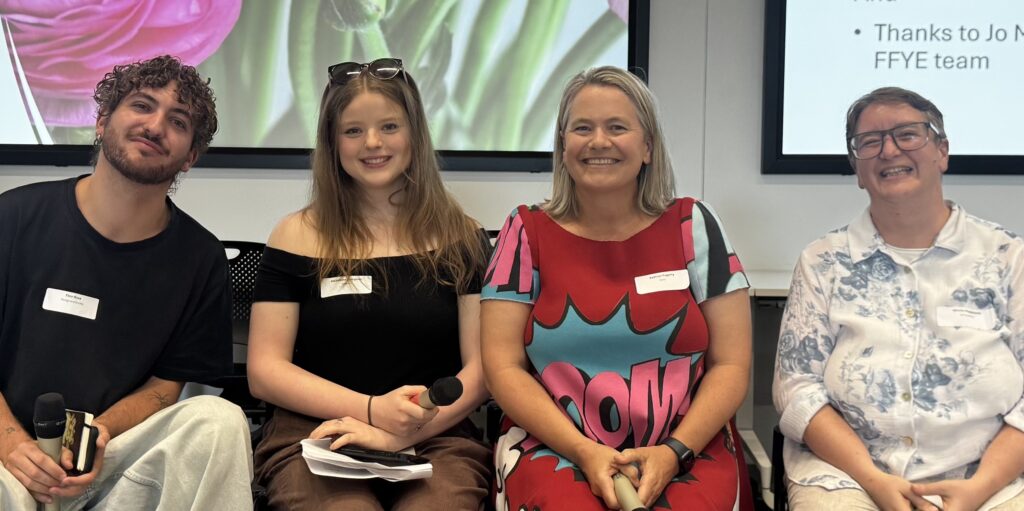
The forum closed with a panel to reflect on the day’s learnings and their own GenAI experiences, with representation from UTS staff Kathryn Fogarty and Nicole Pepperell, and students Finn Rose (Architecture) and Madeleine Campbell (Forensic Science and Criminology). The students reflected on initial uncertainty and resistance, particularly in Madeleine’s field of Forensic Science where ethical and privacy concerns are paramount. Finn also highlighted ongoing considerations and the need for care in design, acknowledging how AI tools can reinforce bias and perpetuate dominant (Western) aesthetics and perspectives. Whilst broader ethical questions remain, the potential of GenAI as a tool to enhance human expertise (not replace it) has been helpfully explored through structured, open discussion with UTS academics and seeing authentic industry applications.
Kathryn emphasised that GenAI’s success lies in solving real problems rather than being a “solution in search of a problem.” The panel suggested embedding ethical considerations and critical thinking throughout curricula – not as a checkbox exercise but as a core learning objective. AI integration will need to be guided by agility, transparency and a commitment to equity to ensure higher education remains relevant and trustworthy in an AI-driven world.
15 years of First and Further Year Experience (FFYE)
Designed to enhance student success, particularly for students from low socio-economic status backgrounds, the FFYE program (originally FYE) has been running at UTS for 15 years. Forums and grants like those illustrated here have continually promoted engagement with inclusive, student-centred practices, collaborative design, student agency and personalised learning.
You can explore more about how the FFYE program was developed and how it has evolved over time in Transition Pedagogy in Action: A 15-Year Institutional Journey, a recently published practice report by Kathy Egea and Jo McKenzie. The report was featured in A Generation of Transition Pedagogy, a special issue of the Student Success journal, and illustrates how Transition Pedagogy can evolve and provide a transformative framework for enhancing student engagement and success.